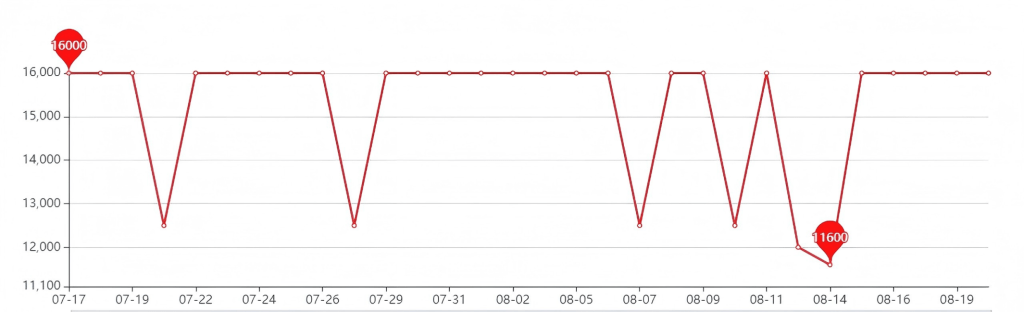
China Salicylic Acid Price Trend in 2025

In 2025, China salicylic acid market will experience significant price fluctuations due to surging demand for pharmaceuticals and cosmetics and supply chain adjustments. Industrial-grade salicylic acid prices will stabilize between 11,500 and 16,000 yuan per ton, while pharmaceutical-grade materials will reach 16,000 yuan per ton in key regions such as Shandong.

Driven by localized production costs and environmental compliance pressures, prices for industrial applications in Shandong Province ranged from 10,300 to 13,800 yuan per ton. Export volume increased by 26.06% in the second quarter, while export prices fell slightly to US$1,789.17 per ton.

However, raw material fluctuations (such as phenol shortages) and tightening environmental regulations could increase production costs. Technological advances in green synthesis and high-purity products may stabilize prices after 2025.

2024 – 2025 Salicylic Acid Price in China

Average price (yuan/ton)September 24October 24November 24December 24January 25February 25March 25April 25May 25June 25July 25August 25
1-5 th14666.6711500.0015000.0014000.0012350.0018000.0012800.0013000.0012600.0013520.0013375.0016000.00
6-10 th13600.0015200.0016000.0013400.0013300.0012650.0012800.0012000.0013600.0013900.0013375.0014600.00
11-15 th14200.0015200.0013840.0013750.0013333.3312000.0013600.0013200.0014000.0013620.0014025.0013900.00
16-20 th13675.0014400.0013640.0013880.0013733.3312000.0012800.0012450.0012000.0014400.0016000.0016000.00
21-25 th14480.0014750.0011775.0013400.0014250.0012800.0013000.0012900.0013900.0014400.0015300.00
26-31 th15400.0015700.0014000.0014400.0011850.0012433.3314920.0012350.0014666.6713125.0015300.00

The above information is for reference only, and the actual purchase shall prevail.

About US CHENYANG (INNER MONGOLIA) MEDICAL TECH. CO.,LTD  is a high-quality Salicylic Acid (CAS 69-72-7​) supplier and manufacturer in China. We have large stock, factory direct price, quality assurance.We are also a Factory in China that produces and sells Salicylamide, Sodium Salicylate,Methyl Salicylate, Glcoyl Salicylate.

The Introduction of Glycol Salicylate

Glycol salicylate, also known as 2-hydroxyethyl salicylate, is a benzoate ester used as an active ingredient and topical analgesic in patches1. It is obtained by the formal condensation of the carboxy group of salicylic acid with one of the hydroxy groups of ethylene glycol12. Glycol salicylate is a nonsteroidal anti-inflammatory drug and an ingredient of many topical creams and sprays used for the relief of aches, pains, and stiffness of the muscles, joints, and tendons. Here below are some label holders and their product by using the glycol salicylate (2-hydroxyethyl salicylate) as the key active ingredient.

  • NAME INGREDIENTS DOSAGE ROUTE LABELLER MARKETING START MARKETING END
  • AMMELTZ YOKO YOKO Glycol salicylate (2.5 g/100ml) + Benzyl nicotinate (10 mg/100ml) + Chlorpheniramine maleate (100 mg/100ml) + Levomenthol (3 g/100ml) + Nonivamide (12 mg/100ml) Liquid Topical KOBAYASHI Healthcare (Malaysia) Sdn. Bhd. 2020/9/8 Not applicable
  • Counterpain Patch Glycol salicylate (1.4 % w/w) + Levomenthol (4.9 % w/w) + Synthetic camphor (0.9 % w/w) + alpha-Tocopherol acetate (2 % w/w) Patch Transdermal HOE PHARMACEUTICALS SDN. BHD. 2020/9/8 Not applicable
  • Counterpain Patch Hot Glycol salicylate (2 % w/w) + Levomenthol (1 % w/w) + Nonivamide (0.013 % w/w) + alpha-Tocopherol acetate (0.8 % w/w) Patch Transdermal HOE PHARMACEUTICALS SDN. BHD. 2020/9/8 Not applicable
  • Deep Heat Sports Pain Relief Spray Glycol salicylate (5 % w/w) + Ethyl salicylate (5 % w/w) + Methyl nicotinate (1.6 % w/w) + Methyl salicylate (1 % w/w) Aerosol, spray Topical ROHTO-MENTHOLATUM (M) SDN. BHD. 2020/9/8 2022/2/8
  • Etrat – Gel Glycol salicylate (5 g) + Heparin sodium (5000 IU) + Levomenthol (0.5 g) Gel Topical Glenwood Gmbh Pharmazeutische Erzeugnisse 1973/12/13 Not applicable

What is the production satus of our Glycol salicyate (2-hydroxyethyl salicylate)?

  • Production capacity: 120mts/year
  • With the reference to JP and customer made standard.
  • Packing Information: 25Kgs/PE Drum; 32 Drums/Pallet.

The Types of methyl salicylate

What is Methyl Salicylate?

Methyl Salicylate sometimes called wintergreen oil, this sweet-smelling member of the aspirin family is one of the most widely used counterirritants. Although it is extremely toxic, manufacturers use methyl salicylate in very low concentrations as a flavouring agent in candy, chewing gum, cough drops and toothpaste.

Methyl salicylate has anti-inflammatory properties and is still used, incorporated into liniments and ointments for joint and muscle pains and for rheumatic conditions.
Sources of synthetic Origin: Structurally it is the methyl ester of salicylic acid. Hence, it can be produced from the condensation reaction of salicylic acid and methanol.

1. Cosmetic Products

Methyl salicylate is used in cosmetics as a warming agent and in sport massage products as a rubefacient. The corresponding finished products may contain 3-9% methyl salicylate. It is used in perfumery as a modifier in blossom fragrance and in oral hygiene products as a mild antiseptic. As a denaturant and flavouring agent at concentrations in the range of  0.0001% to 0.6%. As a flavouring agent in toothpastes up to 1%.

The prime purpose of the sports cream/ massage products is to alleviate certain discomforts arising occasionally in connection with sports and physical exercises. They in fact remove muscle aches, it is used as anti-inflammatory, because it would make these products subject to the medicinal products regulations.

Salons proving aromatherapy also use wintergreen oil with a methyl salicylate content of up to 98%. Wintergreen oil is an essential oil. According to their working codex, essential oils are blended with other “base” oils at concentrations in the range of 0.5-5%.

2. In Foodstuff

Methyl salicylate is used as a flavouring agent in chewing gum, baked goods, syrups, candy, non-alcoholic beverages and ice cream. The compound occurs naturally in various vegetables and edible berries.

3. In Medicine

Methyl salicylate has anti-inflammatory properties and is still used, incorporated into liniments and ointments for joint and muscle pains and for rheumatic conditions, but apart from this no plant extract with salicylate is now available in western pharmacies. 12 different methyl salicylate containing topical products to relieve muscle pain, these contain 3-18% methyl salicylate.

Methyl salicylate has the actions of salicylates , as described under Sodium Salicylate , but it is seldom given by mouth . It is readily absorbed through the skin and is applied in liniments and ointments for the relief of pain

Frequently Asked Questions on Methyl Salicylate

Q1

What is methyl salicylate used for?

Topical methyl salicylate (for the skin) is used for acute muscle relaxation or joint pain caused by strains, sprains, inflammation, swelling, or backaches. Methyl salicylate topical can also be used for uses that are not mentioned in this drug guide.

Q2

Is methyl salicylate dangerous to humans?

There is no question that when ingested, methyl salicylate can be toxic but most cases of human toxicity are due to topical over-application! … Methyl salicylate toxicity warning symptoms vary from fatigue, nausea , headaches, dizziness, trouble breathing, convulsions, ear ringing and vomiting.</

Q3

How does methyl salicylate relieve pain?

Methyl salicylate is used to treat mild muscle / joint aches and pains (for example, arthritis, backache, sprains). Menthol and methyl salicylate work by making the skin feel cool and moist, afterwards. These feelings on the skin distract you from feeling your muscles and joints deeper in the aches / pains.

Q4

Is methyl salicylate an anti inflammatory?

In a group of medications called salicylates, methyl salicylate is a non-steroidal anti-inflammatory medication (NSAID). Camphor, lidocaine, and topical methyl salicylate (for the skin) is a combination drug used to temporarily alleviate mild to moderate muscle and joint aches and pains.

Q5

What are the side effects of methyl salicylate?

Clean the skin and get medical attention immediately if you have extreme burning, discomfort, swelling, or blistering of the skin where this drug was applied. Less severe side effects may include a slight sense of cold or burning.

What the quality of methyl salicylate in our factory?

  1. With High purification.

2. With phenol content from 800ppm to 5 ppm as customer required.

3. With low methylparaben from 80ppm to 0 ppm as customer required.

4. It meets USP/BP/EP/JP/CP/IP and can customer made quality standard.

The Types of Salicylic Acids

Salicylic acid is used to treat a variety of skin conditions, including acne, psoriasis, dandruff, and warts. It is classified as a keratolytic agent, a compound that can break down the outer layer of your skin, and it’s best known for its ability to rejuvenate and exfoliate the skin.1 Salicylic acid also has anti-infection and anti-fungal properties. It’s derived from the bark of white willows and wintergreen leaves but is also produced synthetically.2

Though it’s usually well tolerated, salicylic acid can cause side effects, as well as drying and irritation, if not used according to instructions. Consult a healthcare provider, like a dermatologist, before using salicylic acid to treat a specific skin condition.1

MedlinePlus. Salicylic Acid Topical. A dermatologist is a medical doctor who specializes in skin, hair, and nails.

Types of Salicylic Acid and Their Uses

Salicylic acid is sold as part of many different products and in several forms. You can purchase salicylic acid over-the-counter (OTC). Sometimes, it’s prescribed by dermatologists.

Salicylic acid comes in a variety of types, including pads or wipes, cleansers, moisturizers/lotions, liquid/gels, skin peels, and shampoos.1

Products containing salicylic acid are used to treat many different skin conditions, such as:3

Cleansers and Wipes

Acne medications containing salicylic acid usually come in the form of a cleanser or wipe. Salicylic acid for acne works by opening clogged pores and exfoliating the skin. It’s usually recommended for the treatment of pimples and whiteheads. Always follow instructions carefully for these medications, as they can dry out and irritate the skin if not used cautiously.4

Gels and Liquids

Salicylic acid often comes in gel and liquid form. This is the most common form used to treat warts. Plaster pads may also be used for wart treatment. You can get salicylic wart medication OTC and treatment can be done at home. These pads usually need to be used daily, for weeks, for the wart to fully disappear. Wart treatments are highly concentrated forms of salicylic acid that work by slowly peeling away the skin where the wart is and causing the wart to disappear.5

Gel and liquid forms of salicylic acid are also sold to treat acne, but these preparations are usually much less concentrated than the ones used to treat warts. Never use a wart salicylic medication to treat other skin conditions.5

Moisturizers and Lotions

Sometimes salicylic acid is used as an ingredient in various moisturizers and lotions. Salicylic acid is an exfoliant, but it can dry out the skin. Keeping the skin hydrated with a moisturizer can help balance the effects of salicylic acid. Read the labels carefully for any salicylic moisturizer you use, to ensure you can tolerate the other ingredients.4

Shampoos

When salicylic acid is used to treat seborrheic dermatitis (dandruff), it usually comes in the form of a shampoo. The salicylic acid in the shampoo can help exfoliate and renew the skin on the scalp, thereby reducing dandruff.6 Salicylic acid shampoos may also be used to treat psoriasis and ichthyosis.7

Face Peels

Salicylic acid’s strong exfoliating features make it a good candidate for face peel, particularly in people prone to acne. Salicylic face peels are also used to treat melasma, freckles, liver spots, and sun damage.8

Face peels (chemical peeling) work by exfoliating superficial skin layers, causing new skin to regenerate. Although salicylic face peels are sometimes sold OTC, it’s usually recommended that you do a face peel under the guidance and care of a dermatologist.8

How To Use

The best way to use a salicylic product is to read the instructions for usage and follow them carefully. Each product will have specific instructions for how much to use how often and other precautions. Consult your healthcare provider about specific usages, even for OTC salicylic products, and follow your doctor’s instructions carefully. These products tend to be highly concentrated and should be used cautiously.1

You might notice extra dryness and irritation at first. It’s usually best to use salicylic acid products sparingly and gradually increase to larger amounts. Try a “patch test” by applying a small amount to your skin, waiting several days, and seeing if there is any severe reaction.1

Other important usage instructions include:1

  • Never place salicylic acid near your eyes, mouth, or nose
  • Never swallow salicylic acid
  • Don’t apply salicylic acid to damaged, broken, or infected skin
  • Don’t apply salicylic acid to areas of your skin not affected by your skin condition
  • Don’t use a bandage or dressing over the salicylic acid application unless directed to do so by a healthcare provider
  • Don’t combine salicylic acid products with abrasive soaps or products containing alcohol, benzoyl peroxide, resorcinol, sulfur, or tretinoin, as your skin can become extremely irritated
  • Always read the package label and follow instructions carefully
  • Sometimes it can take several weeks for a salicylic acid product to work most effectively

Safety and Side Effects

Salicylic acid products are typically tolerated well and have minimal side effects, especially if used according to instructions. The most common side effects are:3

  • Mild stinging
  • Dryness
  • Irritation
  • Flushing or reddening of the skin
  • Increased warmth to the skin

If you’ve ever had an allergic reaction to salicylic acid, you should not use it. Children under the age of two should not use salicylic acid. Talk to your pediatrician before using it with older children. Salicylic acid can be absorbed into the skin and may affect fetuses. Any pregnant parent should discuss the risks and benefits of using salicylic acid with a healthcare provider.3

Choosing a Salicylic Acid Product

Although it’s possible to use an OTC salicylic acid product without guidance from a healthcare provider, it’s usually best to consult a provider first. Your healthcare provider can help you choose the right product for your particular skin condition and give you instructions. Also talk to your doctor about any allergies you have, medications you take, and vitamins and herbs you use.1

Only use products aimed toward the specific condition you are treating. Salicylic acid medications have varying strengths. For example, salicylic acid products used for wart removal usually are highly concentrated and may contain up to 27% salicylic acid.9

National Library of Medicine. SALICYLIC ACID- salicylic acid liquid. On the other hand, salicylic acid for acne usually contains 2-5% salicylic acid.10 Too much salicylic acid used on your face can seriously irritate your skin while using too little salicylic acid for wart treatment might not be effective.

A Quick Review

Salicylic acid is an exfoliant that is most commonly used to treat acne. It can also be used to treat dandruff, warts, psoriasis, and other common skin conditions. While salicylic acid is usually well tolerated, it can cause irritation and excessive dryness if not used properly.

Always follow the instructions carefully for whatever salicylic acid product you use and consult with your healthcare provider if you have further questions.1